Summer Internships Put LSC Students’ Skills into Action
From launching an online community for scientists to documenting environmental research and managing farmland, LSC students took on a variety of summer internships.
While summer offers a break from classes, many students at UW–Madison spent those months gaining experience outside the classroom. For three LSC students, that meant taking on projects in biotechnology, environmental research, and agricultural business.
This summer, Olivia Nygaard, Nicholas Gitterle, and Josie Ammons completed internships that brought them to different corners of Wisconsin and Iowa. Along the way, they worked with researchers, developed communication materials, and gained a closer look at careers in their respective fields. These positions brought an array of diverse responsibilities. All three students found ways to apply skills developed through LSC coursework, grow their professional experience, and explore potential career paths.
Exploring marketing in biotechnology
For students interested in combining science and marketing, biotechnology companies offer opportunities to work with scientific audiences while developing skills in strategic communication, content creation, and audience engagement. Olivia Nygaard, a senior double-majoring in Biology and Life Sciences Communication, explored this career path as a Marketing Intern at Promega Corporation.
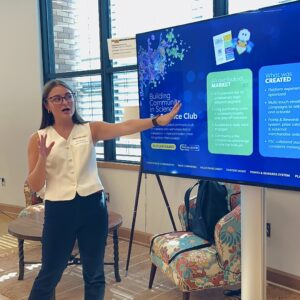
Working on Promega’s Academic and Government Markets team, Nygaard supported a variety of marketing initiatives, including internal and external sales resources, customer relationship management (CRM) campaigns, content development, and vendor communication. Her responsibilities required her to consider how different audiences interact with scientific information. Whether developing materials for sales representatives or creating content for researchers, she drew on communication principles explored throughout her LSC education.
One of her largest projects involved helping build and launch Pro Science Club, an online community designed to connect scientists and researchers from academia, industry, and government. The platform provides a space for researchers to ask questions, exchange experiences, and learn from one another. Nygaard helped develop the community and now works on promoting Pro Science Club and introducing new members to its resources.
Through the internship, she gained experience with the different stages of a communication initiative, from initial development to promotion and audience engagement. The variety of projects also offered insight into how marketing supports both business goals and relationships within the scientific community.
Sharing environmental research through outreach
Students interested in conservation, environmental science, or public engagement can also find opportunities to use their communication skills in research settings. Nicholas Gitterle, a student majoring in Wildlife Ecology and Life Sciences Communication, spent his summer as an outreach intern at UW–Madison’s Kemp Natural Resources Station.
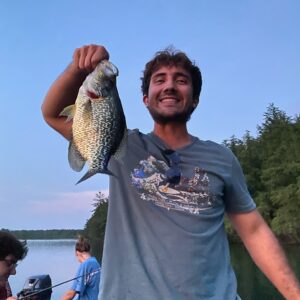
His role brought him directly into the field, where he shadowed researchers, photographed their work, and gathered information to create social media content for public audiences. Gitterle also helped with outreach events, produced a video about Kemp Station’s history and buildings, and gave a public presentation on conservation practices he observed while studying abroad in Kenya.
The position allowed him to put skills from his LSC Video Production and Documentary Photography courses into practice. Through those classes, he developed techniques for telling stories visually, which became an important part of documenting and sharing research at Kemp Station.
“The single most valuable aspect of the internship was the opportunity to meet the researchers and staff and to do something completely different every single day,” Gitterle said.
His experience demonstrates how communication-focused internships can complement scientific interests, particularly for students who enjoy working directly with researchers and translating their work for broader audiences.
“Whether that was shadowing scientists in the field, producing outreach materials, or giving my presentation on conservation in Kenya, I was always learning and making connections,” he said.
Applying communication in agricultural business
For students interested in agriculture, business, or public policy, communication skills can be equally valuable in roles that may not initially appear communication-focused. Josie Ammons, an Agricultural Business Management major pursuing certificates in Science Communication and Public Policy, spent her summer as a farm management intern at Hertz Farm Management in Cedar Falls, Iowa.
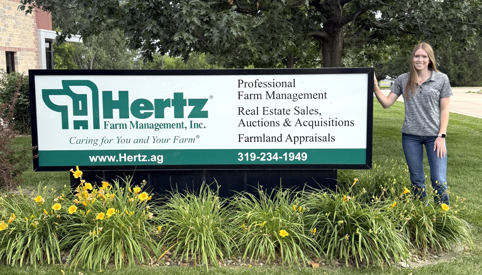
Ammons worked on projects involving lease comparisons, farmland real estate, and potential capital improvements. Her individual internship project involved developing a professional farm plan for a beef cattle and row crop operation spanning more than 1,000 acres in northeastern Iowa. She also attended farm owner tours, landowner educational seminars, and potential client meetings, gaining experience with the relationships and decisions involved in managing agricultural properties. Although her responsibilities focused on farm management, Ammons regularly applied skills developed through her LSC coursework.
“Knowing how to write in a professional tone and communicate complex information was incredibly useful for my internship,” Ammons said.
Beyond her daily responsibilities, Ammons valued learning about the company’s approach to supporting landowners and preserving agricultural land.
“The most valuable part of my internship was seeing how Hertz aims to not only serve their clients currently but also preserve American farmland for future generations,” she said.
Her experience also led to a full-time opportunity. After graduating in spring 2027, Ammons will return to Hertz Farm Management as a professional farm manager at its Geneseo, Illinois office.
More than a summer internship
Although their internships took them into different industries, Nygaard, Gitterle, and Ammons shared the opportunity to take on meaningful projects, learn from professionals in their fields, and apply skills developed through their LSC coursework. Their experiences reflect the variety of work LSC students are pursuing. Each job offered a chance to explore new interests, build professional connections, and put classroom skills to work. The relationships and knowledge gained along the way can continue to shape students’ career paths long after summer ends.
Summer internships are more than an opportunity to gain professional experience. They can be a chance to see where your interests and education can take you, and, in some cases, where those experiences could lead you next.
Written by Olivia Nygaard, LSC Lenore Landry Intern