“Know Your Ice, Know Your Odds”: New Research Highlights Ice Safety Risks for Great Lakes Anglers

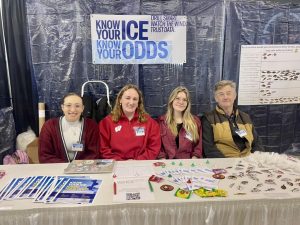
LSC students Victoria Rubinetti, Abby Cortichiato and Catie Stumpf sit at a table at the Wisconsin Fishing Expo in Oshkosh with LSC Professor Brett Shaw
From left to right: LSC students Victoria Rubinetti, Abby Cortichiato and Catie Stumpf attend the Wisconsin Fishing Expo in Oshkosh with LSC Professor Brett Shaw.
As temperatures rise in the Madison area, concerns about this year’s ice cover are growing—and for ice anglers, the risks are becoming more serious. A recent study by LSC researchers highlights just how unpredictable ice conditions can be, reinforcing the need for clearer, more effective safety communication. Data from the NOAA Great Lakes Environmental Research Laboratory shows the Great Lakes have seen a 70% decline in average annual maximum ice cover over the past few decades, making awareness of these risks more important than ever. Their message is clear: “Know Your Ice, Know Your Odds.”

That message is already shaping how ice safety is communicated across the region. In collaboration with Wisconsin Sea Grant, LSC researchers Nan Li and Bret Shaw developed a project focused on improving how anglers understand and respond to emerging ice hazards—translating research insights into practical, real-world guidance.

To do this, the team examined how anglers perceive risk and where they get their information—key factors that influence whether safety messages are trusted and followed. The research began with 14 in-depth interviews with nearshore ice anglers in Green Bay, Wisconsin, followed by an online survey of 310 anglers from across the western Great Lakes.

The findings revealed a growing challenge: anglers widely recognize that ice conditions are becoming more unpredictable, yet many rely on informal or inconsistent sources for safety information. Facebook, close social networks, fishing guides, and real-time observations emerged as the most trusted sources—highlighting both an opportunity and a gap for effective communication.

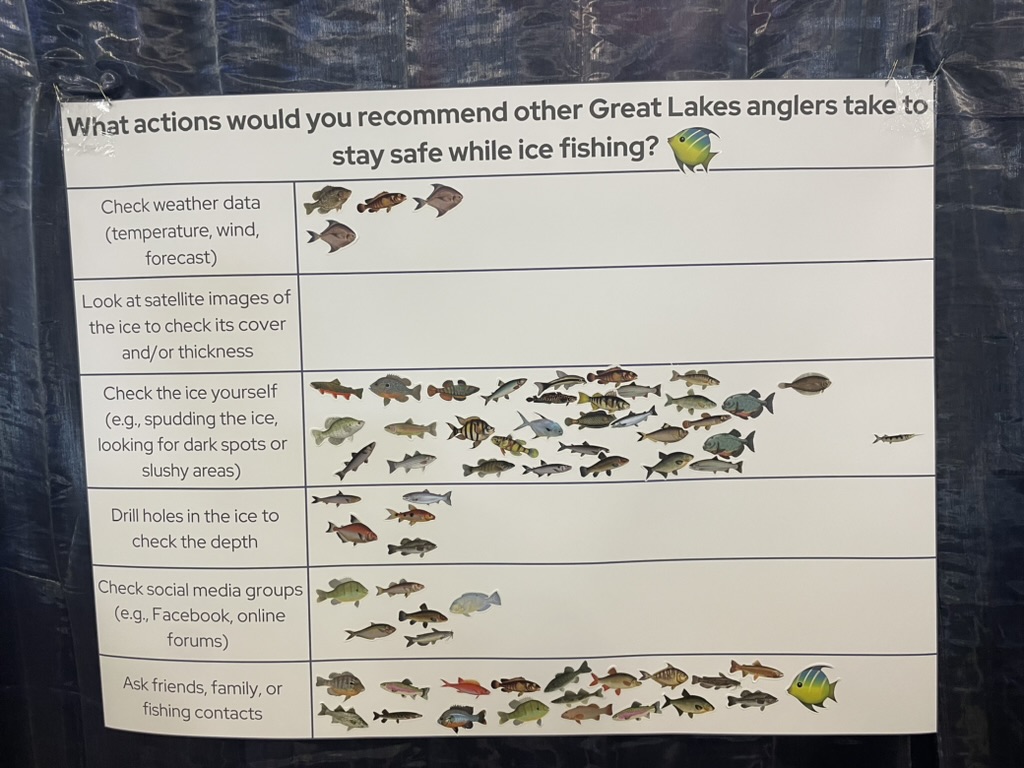
An interactive poster at the Wisconsin Fishing Expo in Oshkosh encourages members of the public to think about safety while ice fishing by placing fish stickers underneath the ways that they practice that behavior. "Check the ice yourself" had the most responses.
An interactive poster at the Wisconsin Fishing Expo in Oshkosh encourages members of the public to think about safety while ice fishing.
The study also identified a significant “optimistic bias.” While many anglers expressed concern about others’ safety, they remained confident in their own ability to judge ice conditions. According to Li, this disconnect underscores the need for messaging that not only informs individuals but encourages shared responsibility.

“We focus more on this positive kind of efficacy,” Li says. “Building messages where we encourage people to further boost their confidence and to, more importantly, protect each other.”

These insights directly informed the development of a targeted safety campaign. Working with fisheries experts from Sea Grant, the team created communication materials centered on the message “Know Your Ice, Know Your Odds,” promoting key behaviors such as drilling frequently to check ice thickness, monitoring wind conditions, and relying on trusted data sources.

Those messages are already reaching anglers. The campaign was featured in the 2025 Ice Fishing Magazine and shared at the Wisconsin Ice Fishing Expo, where researchers and students engaged directly with the angling community.

At the Expo, Shaw and several LSC students distributed materials and spoke with anglers about their experiences on the ice. These conversations, Shaw says, are essential for ensuring the research reflects real-world conditions and concerns.

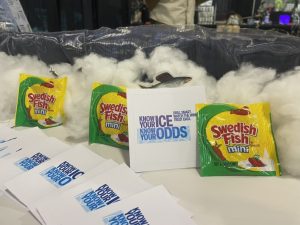
The immersive booth at the Wisconsin Fishing Expo in Oshkosh featured Swedish Fish candy, artificial snow, fish stickers and more.
An immersive booth at the Wisconsin Fishing Expo in Oshkosh was designed by LSC master’s student Victoria Rubinetti and featured Swedish Fish candy, artificial snow, fish stickers and more.

LSC master’s student Victoria Rubinetti designed the Expo’s immersive booth to draw attention to the campaign. Using reflective fabric, artificial snow, and icicles to recreate the surface of a frozen lake, the display invited attendees to engage with safety materials, participate in an interactive survey, and share their own perspectives.

From identifying gaps in how anglers assess risk to developing practical tools that promote safer behavior, LSC researchers are helping reshape how ice safety is understood and communicated—at a time when changing conditions make that work more urgent than ever.

Written by: Catie Stumpf, LSC Lenore Landry Intern
Published: April 2026